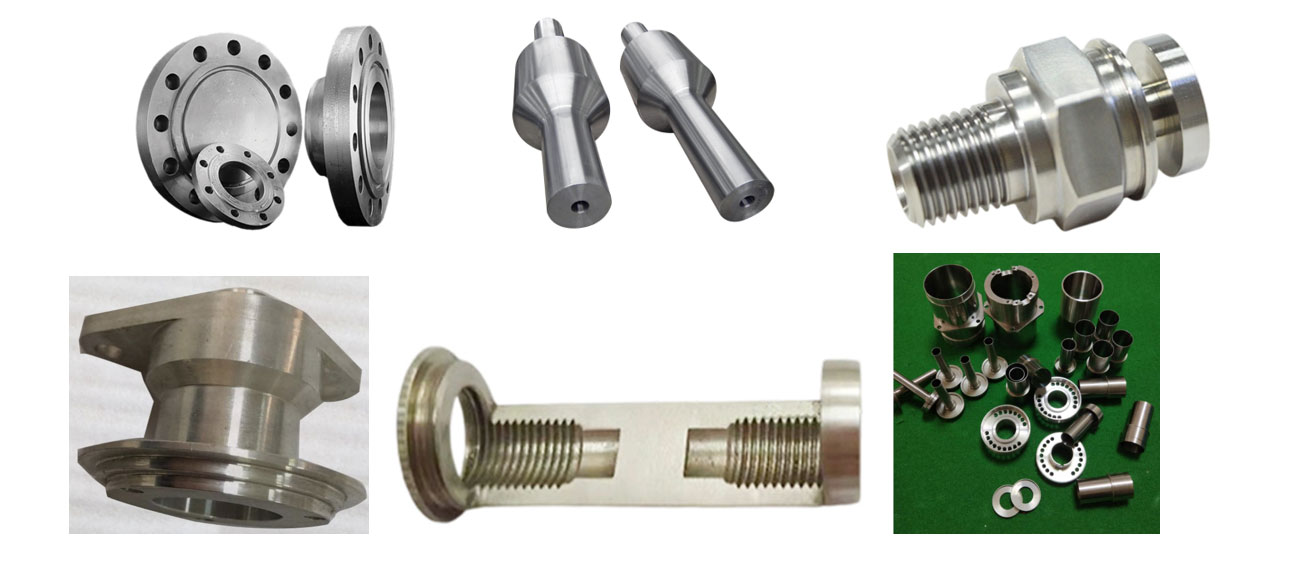
Machined Machine Parts
Machining types: flanged parts, shafts, internally and externally threaded parts, connectors, etc.
Industrial equipment often requires specialized parts that are difficult to source commercially. Examples include flanged parts, connectors, stepped shafts, internally and externally threaded parts, as well as mounting and guiding elements. We undertake the machining of custom metal and non-metal parts based on technical drawings, dimensional data, or suitable sample pieces. The finished parts can be used for new equipment or as replacements for worn or damaged machine components.
Key machining equipment and maximum working dimensions: lathe: Ø500 × 1500 mm and Ø720 × 210 mm; surface grinder: 750 × 340 × 325 mm; milling machine: 730 × 400 × 400 mm; broken tap/bolt extractor: Ø0.8–Ø10 mm, up to a depth of 70 mm.
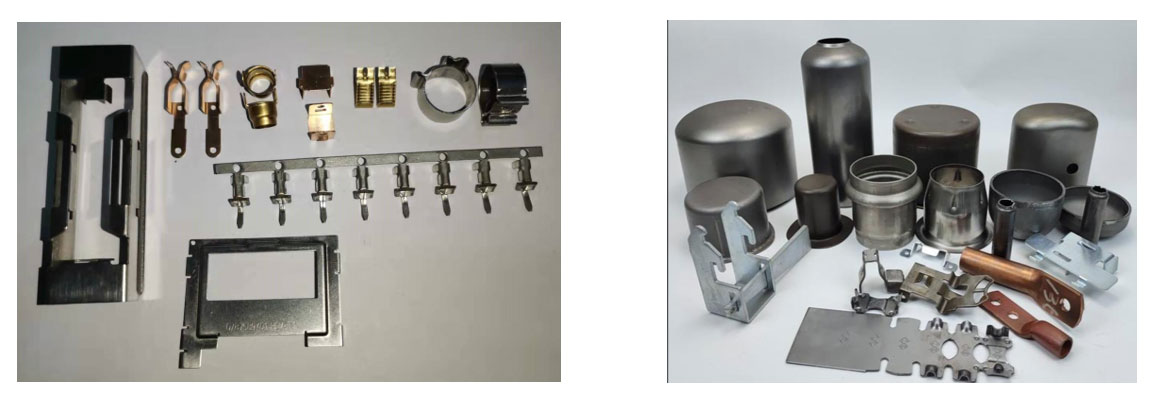
Sheet Metal Stamping and Forming
Machining methods: sheet metal stamping, bending, and 3D sheet metal forming.
Stamping technology is well-suited for the serial production of metal parts with consistent dimensions and repetitive geometries. Depending on the part design, the manufacturing process may involve a series of sequential blanking and forming operations. Sheet metal forming allows for the creation of various 3D geometries.
We undertake tool design, tool manufacturing, and part production based on technical drawings, dimensional data, or suitable sample parts.
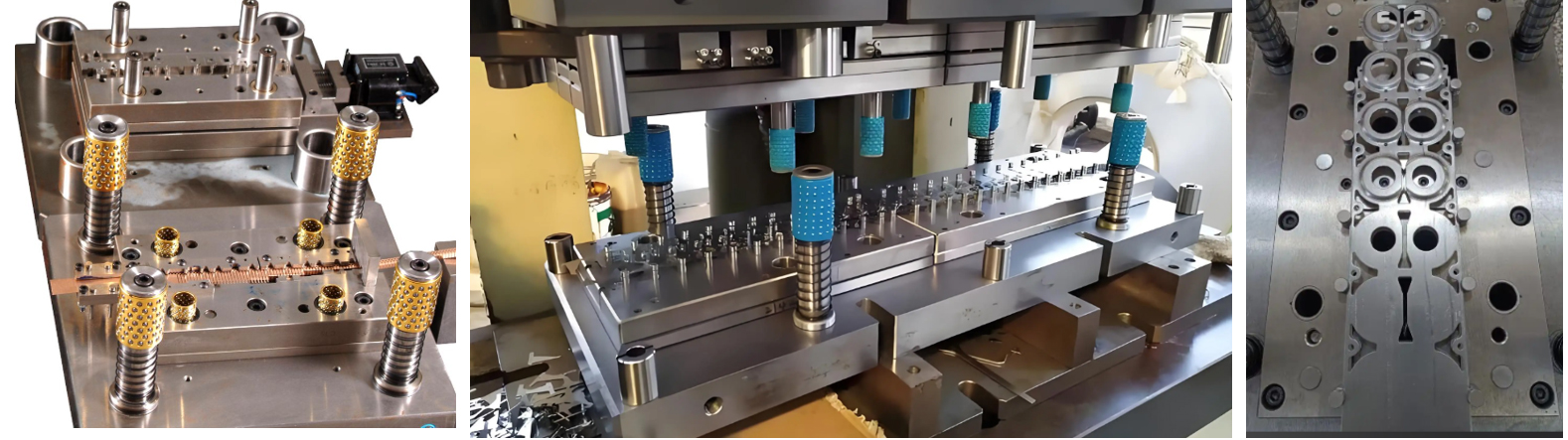
Pressing Tools
Types of machining: multi-stage sheet metal stamping tools, 3D sheet metal forming tools
A pressing tool consists of several interacting functional elements. The design of the guiding and active tool components is determined by the geometry of the part and the required operations. In multi-stage stamping, the part’s geometry is formed gradually across several successive positions, with the tool’s structure defining the location and sequence of each operation. During the design phase, coordination with the press machine and the manufacturing process must be considered alongside the part’s geometry. We undertake tool design, machining, installation, and setup based on technical drawings, dimensional data, or a suitable sample part.
Production and Clamping Fixtures
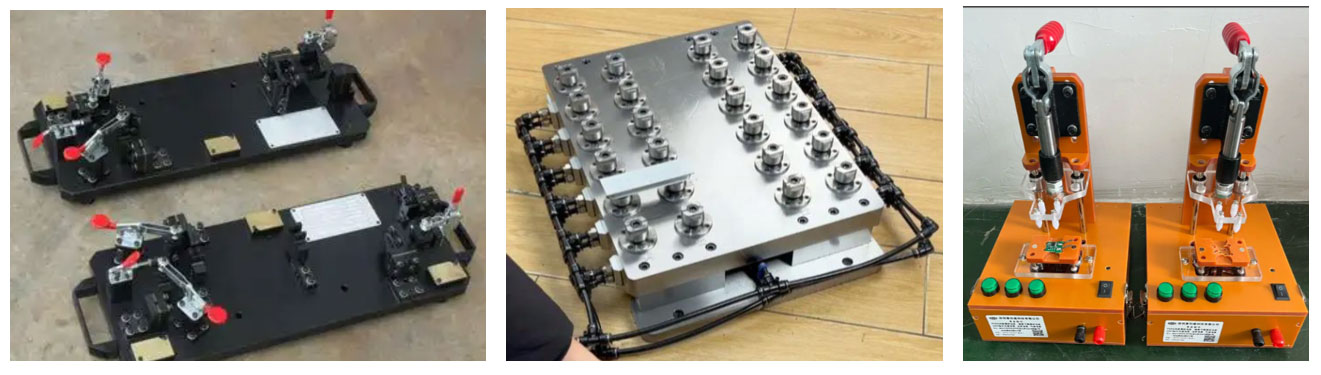
Types: fixtures equipped with toggle clamps, pneumatic fixtures, test fixtures, quick-clamping fixtures
Quick-clamping production fixtures are suitable for repetitive manufacturing or assembly tasks. Multi-position fixtures allow for the simultaneous placement of multiple workpieces. Pneumatic systems can be used to operate specific fixture functions, while the integrated clamping points ensure repeatable workpiece positioning.
Test fixtures can incorporate mechanical clamping, controls, product positioning, as well as signal connections and interfaces for testing equipment, depending on technical requirements. We undertake fixture design, machining, and manufacturing based on technical drawings, dimensional data, or suitable sample parts.
Plasma Cutting and Flame Cutting
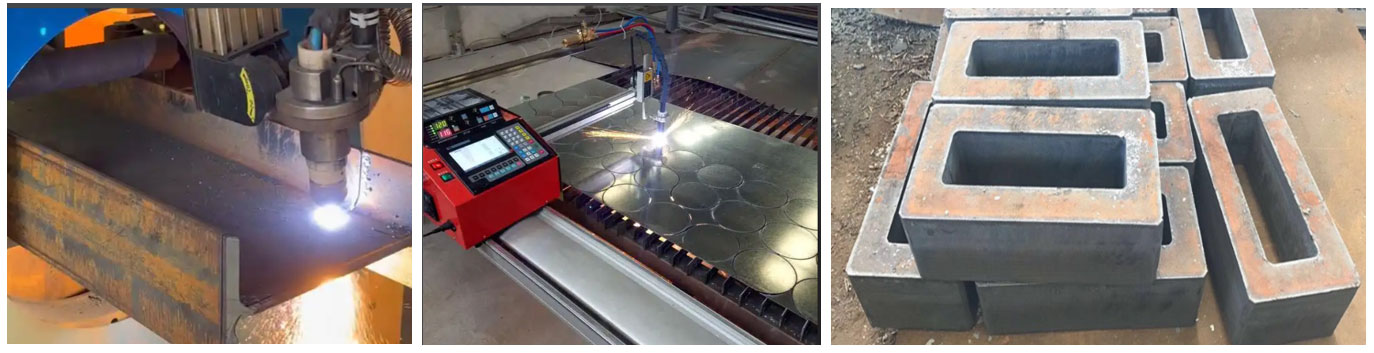
Processing methods: CNC plasma cutting of structural steel components and machine parts; CNC flame cutting of steel plates.
CNC plasma cutting is suitable for cutting metal materials up to 25 mm thick. Numerical control enables the cutting of custom contours and holes along programmed paths, as well as the processing of structural steel and plate components.
CNC flame cutting is used for metal materials up to 200 mm thick and is particularly well-suited for the programmed contour cutting of thick carbon steel plates. Multiple parts or repeating shapes can be arranged on a single plate, allowing for the production of components with custom external and internal contours from thick steel stock.
We select the appropriate cutting technology based on the material, plate thickness, required geometry, and any subsequent processing requirements.
We undertake part nesting and cutting operations based on technical drawings, dimensional data, or suitable sample pieces.
Maximum cutting dimensions: 3000 × 1500 mm; maximum thickness: 200 mm.
Welding, fabrication, and assembly of steel structures
Activities: steel structure welding, machining, fabrication, and assembly
The fabrication of complex steel structures involves a series of sequential operations: preparing shop drawings for structural elements of varying geometries, sizing and verifying load-bearing components, and performing precise cutting, assembly, and welding.
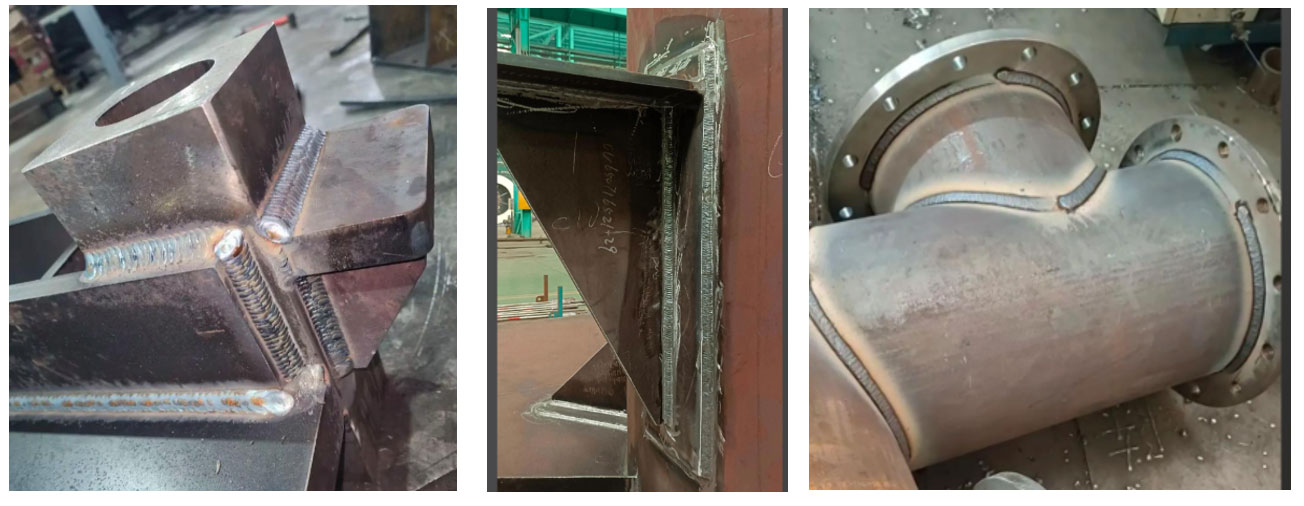
Connecting surfaces, stiffener plates, connection plates, fillet welds, flanged components, pipe fittings, and plate elements can be assembled into structural units of various geometries based on structural plans and fabrication drawings.
Precise positioning is a crucial part of steel structure assembly. When fabricating large-scale structures, the preparation of plates and profiles is followed by positioning, assembly, and the execution of welded joints. We also undertake custom machining and fabrication tasks based on technical drawings, dimensional data, or appropriate sample pieces.
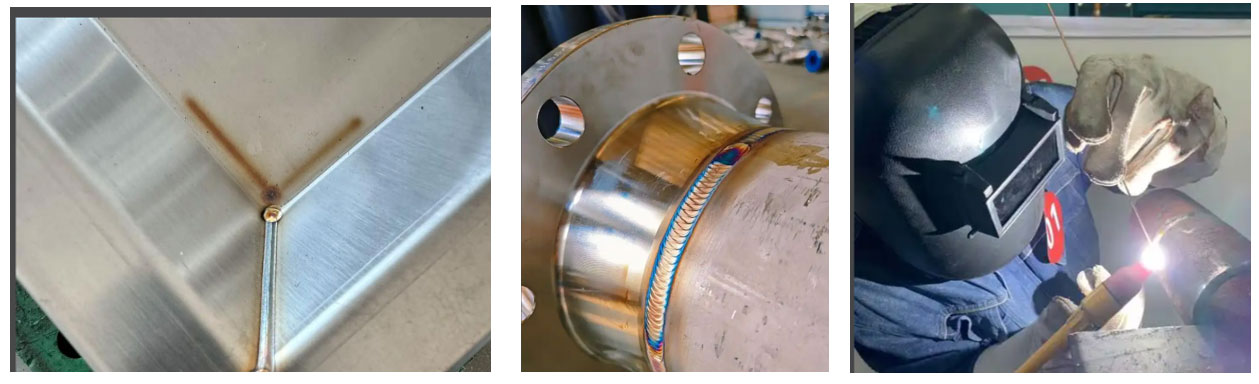
TIG (AWI) Welding
Activities: precision welding of sheet metal, pipe, and custom-shaped components made from various metallic materials.
TIG (AWI) is a welding process utilizing a non-consumable tungsten electrode, characterized by a stable arc and precise control.
Filler material can be added separately when required. The process is suitable for small structural details and welding tasks demanding high precision.
Work is performed based on technical drawings, sample pieces, or specific technical requirements. Key advantages of TIG (AWI) welding include a precisely controllable workflow, an aesthetically pleasing weld seam, and—with the right technology—excellent weld integrity (tightness).